Frankie Reed · 1 September 2026
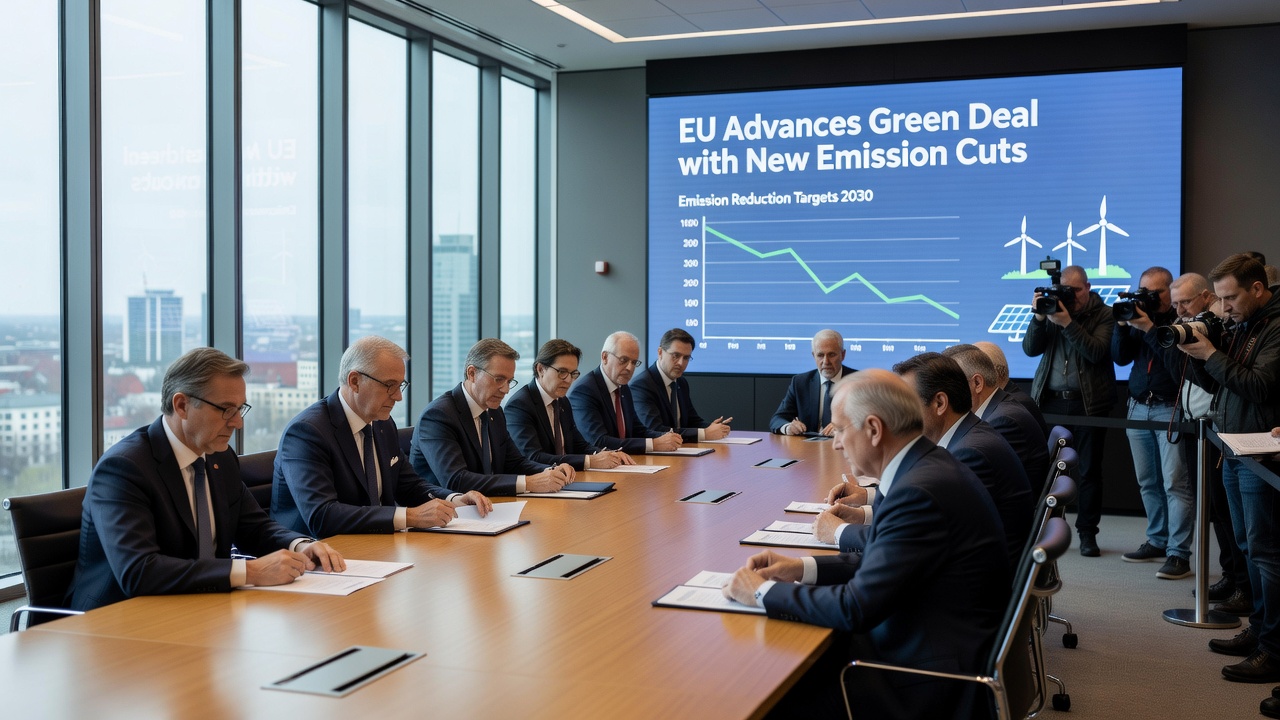
The European Union has reported measurable advances in Green Deal rollout with emission reductions accelerating across key sectors. Data from the European Commission shows a 14 percent drop in overall greenhouse gases since 2021 driven by policy enforcement and investment shifts.
Renewable Energy and Transport Shifts
Renewable capacity expanded rapidly with solar and wind output rising 22 percent year on year. Germany and Spain led installations while offshore wind projects in the North Sea reached new records. Electric vehicle registrations climbed 35 percent aided by expanded charging infrastructure and purchase incentives. Rail freight upgrades reduced road transport emissions in France and the Netherlands. Building renovation programs under the Renovation Wave cut energy use in public structures by 18 percent on average. The Just Transition Fund allocated 8 billion euros to coal regions supporting retraining and clean industry pilots.
Agricultural reforms promoted precision farming and lower fertilizer use cutting related emissions 9 percent. Biodiversity corridors expanded in rural areas aligning with the EU Nature Restoration Law targets. Circular economy measures boosted recycling rates to 58 percent across member states reducing waste sector impacts.
Compliance Gaps and Next Steps
Variation persists among member states with Poland and Bulgaria lagging due to coal dependence and slower permitting. The Commission issued guidance and additional grants to accelerate compliance ahead of 2030 milestones. Monitoring frameworks strengthened through satellite data and national reporting harmonization. Analysts note that sustained funding and cross-border cooperation remain essential to meet the 55 percent reduction goal by 2030. Future focus areas include hydrogen infrastructure scaling and stricter industrial pollution controls.